Dr. Nocetti
The HummingbirdDr. Nocetti is the psychotherapist who treats Adele when her parents’ response to her imagined thread is challenged by the school’s director. He understands the thread not as a literal attachment to walls but as a sign of Adele’s close, exclusive bond with her father, Marco, and urges Marco to be more present in her life. When the thread and Adele’s school distress disappear after Marco takes her to fencing, Nocetti refuses to credit the sport; his interpretation becomes the accepted account, even though Marco privately doubts it. The episode makes Nocetti a catalyst in the family’s attempt to help Adele and in the growing strain between Marco and Marina.
Identity and Introduction
Dr. Nocetti enters the family’s life after Adele struggles at her new school. Her parents had moved house and changed her school, a decision that became an early injury to their marriage: Marco considered the move an unnecessary complication, while Marina’s account of the better school prevailed in part because she had undertaken to transport Adele. The journey took three quarters of an hour in traffic, and the new school brought a more urgent concern. Adele did not want to attend; at dismissal, her parents repeatedly found her alone in a corner, crying.
When the school director summoned them, Marco and Marina told her about the thread Adele said was connected to her back. The director was appalled that they had kept the matter quiet and judged their attempts to minimize it evidence that they had underestimated the problem. She called it an evident perceptual disturbance, possibly obsessive-hallucinatory, and said it required treatment rather than indulgence. With her child-psychology credentials invoked, she referred the parents to a specialist: Dr. Nocetti.
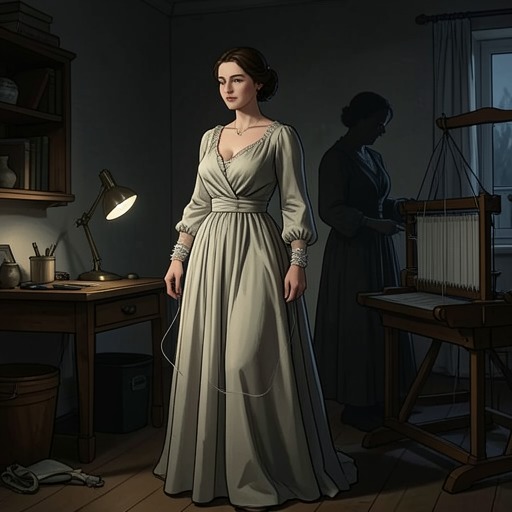
The account presents him through Marco’s watchful, skeptical perspective. He is described as a man-child of indefinite age, with stooped shoulders, lively eyes, sparse ash-gray hair, and strikingly wrinkled skin. A chain with glasses hangs around his neck, though Marco has never seen him put them on. The strange contrast between apparent age and childhood liveliness is echoed in the nickname Nocetti uses with his young patients: the Magician Manfrotto.
Treatment and Interpretation
Marco finds little in Nocetti’s reasoning that resembles his own, although he recognizes him as intelligent. Their differences seem to Marco to arise from having inhabited separate cultural worlds, with books, films, and music in common neither with the other. That distance makes a narrowly defined relationship possible: Marco does not expect personal affinity, only the professional relationship required for Adele’s treatment.
Entrusting his daughter to a psychotherapist nevertheless requires a considerable act of faith from Marco, who is averse to psychotherapists. He relies on the school director’s recommendation, the certificates on the wall of Nocetti’s office in Via dei Colli della Farnesina, and especially Marina’s intuition; she feels reassured by the strange man from the start. The parents bring Adele to the office twice a week, Marina almost always and Marco almost never. As they begin treatment, their earlier fear that they have been irresponsible parents gradually recedes.
For the first two months, Adele’s reluctance to go to school does not change. She does, however, look forward to her two weekly appointments with the Magician Manfrotto. When asked delicately what happens in the fifty-minute sessions, she says only that they play, and never explains what the game is. The withheld detail leaves the treatment opaque to her parents; they know that Adele values the appointments, but not what she and Nocetti do in the room.
Just before Christmas, Nocetti summons both parents to his office without Adele. He tells them that, in his view, the thread does not connect the child to the walls, as she says, but to her father. He reads it as evidence of a close and exclusive bond with Marco, formed because Adele is somehow afraid of losing him. He does not disclose what evidence has led him to that interpretation, and it overturns the parents’ own theory that fencing might be the answer.
Advice and Family Consequences
Marco and Marina respond to the interpretation by asking the same question at once: what follows from it? Nocetti’s advice is direct: Adele should spend more time with her father, ideally more time with him than with her mother. He repeats the emphasis on substantially increasing their time together. The recommendation turns a psychological interpretation into a practical reordering of family life.
That reordering cuts against the household’s established pattern. Marco is happy to be with Adele, but the family has been organized in a comparatively old-fashioned way, with the father less involved in the child’s everyday life than the mother. A more father-centered routine would mean more small tasks for Marco and less of the time he has kept for his other interests; in the familiar division of labor, Marina does the dishes. Marco nevertheless agrees that everything should be done for Adele’s sake. Nocetti’s advice therefore asks not only for affection but for a change in how care is distributed—and for Marco to accept the obligations that come with the bond he has been told he must strengthen.
Fencing, Disagreement, and Significance
In January, Marco acts on the new understanding of his role by enrolling Adele in fencing after a trial lesson, without first discussing the decision with Marina. He begins taking her twice a week and presents his wife with the decision already made. Fencing appears to work quickly: Adele’s thread disappears, she stops turning around when people pass behind her, and she no longer talks about the thread at home. Her resistance to school also subsides; she stops trying to avoid it and is no longer found crying alone at school.
The timing seems to vindicate Marco’s belief that the sport has helped. Yet Nocetti does not change his interpretation: he insists fencing had nothing to do with the thread’s disappearance, which he attributes instead to Marco’s increased presence. Marina, who had initially shared Marco’s belief in the fencing explanation, comes to agree with Nocetti that the coincidence of the two changes is not causal. The immediate problem is resolved before Adele starts elementary school, sparing the family the prospect of a more complicated difficulty, but the resolution does not settle what caused it.
Marco accepts the account without believing it. He recognizes that the agreed version makes the thread his fault—proof that he had spent too little time with Adele—and denies him credit for the change that followed his effort to take her into the imaginative world of fencing. In that version, the credit belongs to Nocetti’s intuition. Marco chooses not to contest the explanation, thanks the therapist, and lets the dispute close for the sake of peace and of the child. The book identifies this acceptance as the third crack in Marco and Marina’s marriage. Nocetti’s role is thus double: his interpretation prompts Marco to become more involved with Adele, while the family’s adoption of that interpretation leaves Marco carrying a moral cost he privately regards as unjust.